The real problem isn’t that AI will eliminate jobs. The latest data from Anthropic suggests something far more interesting: AI isn’t replacing jobs. It’s replacing tasks inside jobs. The real problem is that it will eliminate the bottom 40% of every job. And most companies are not prepared for what that means.
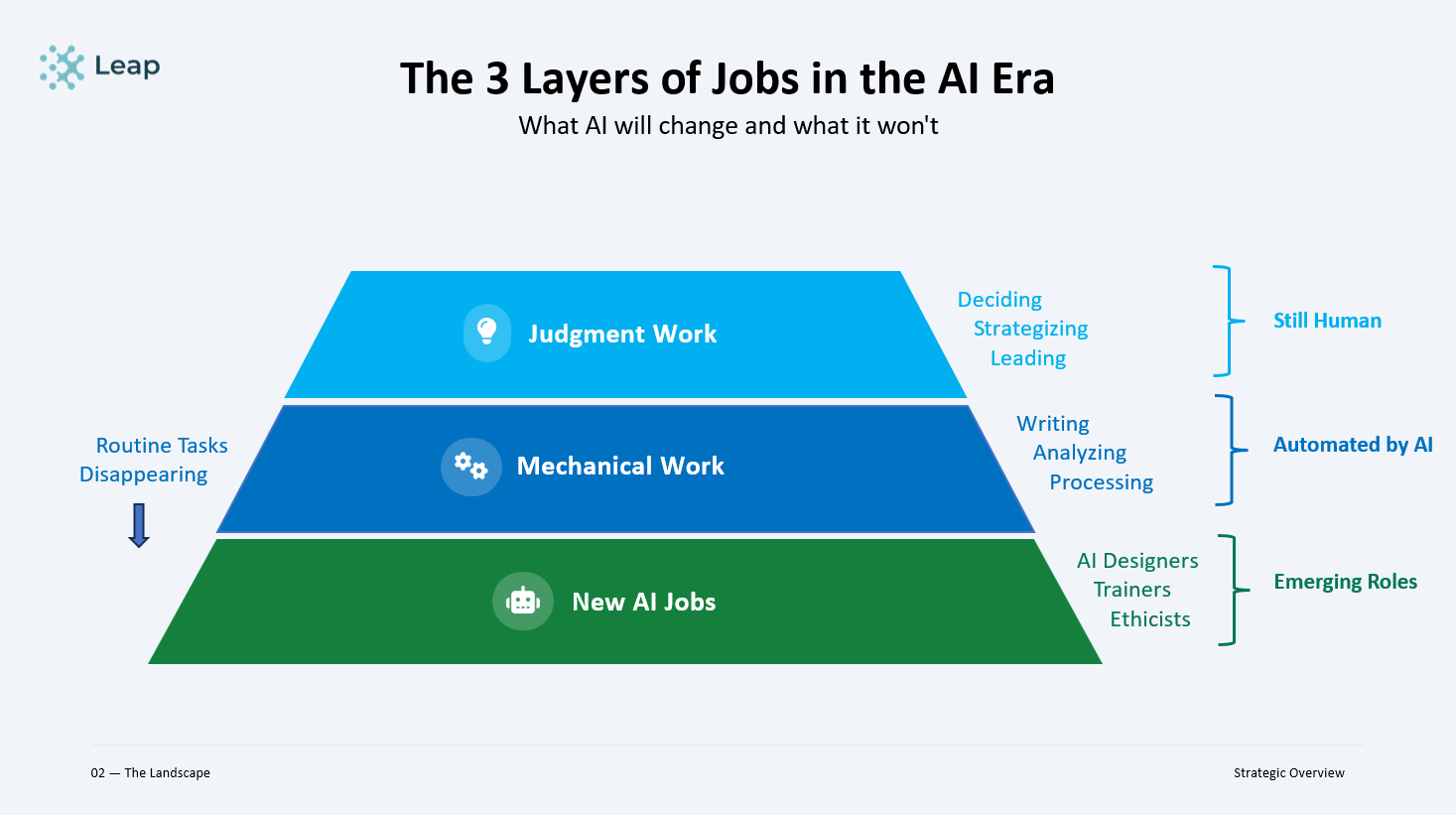
Inside almost every knowledge role there are two layers of work. Layer 1: Mechanical work • writing summaries • preparing slides • searching for information • drafting emails • basic analysis AI already does this faster than most humans.
Layer 2: Judgment work • deciding what actually matters • aligning people with different agendas • making trade-offs • resolving conflict • taking responsibility for decisions AI is still terrible at this.
So the future of work will not be: “AI replaces people.” It will be: AI removes the routine layer of work. And that means jobs will not disappear. They will compress. The same outcomes will be delivered by fewer people , operating at a higher level.
But something even more interesting will happen. Entirely new jobs will emerge around AI itself. We’re already seeing the early versions: • AI workflow designers • human-AI collaboration specialists • AI operations leaders • AI governance managers None of these roles existed a few years ago.
Which leads to the real shift ahead. The workforce of the future will not be defined by skills. It will be defined by how well people collaborate with intelligence that isn’t human. Managers will soon lead three things: people processes and agents.
The companies that win in the AI era will not be the ones replacing humans. They will be the ones redesigning work. And that’s a leadership challenge , not a technology one.
It is not about implementing AI, it is about redesigning work.
Curious: What part of your job would you happily give to AI tomorrow?