Your teams are moving faster. Is the business?
In yesterday’s webinar, The Invisible P&L, I asked a question:
Your next business result is already being shaped. Now. As we speak. In hundreds of managerial moments.
Can you see what is shaping it?
For a fast-growing company, this becomes harder as the organization grows. More teams. More dependencies. More decisions that need several functions to agree.
Add AI, and each team can produce faster. But the work still has to move between them.
A decision keeps reopening. Two teams understand the same priority differently. Nobody is clear about who owns the next step.
Each moment looks small. Together, they affect delivery, productivity and margin.

“Merav, you have a growing inventory problem.”
I learned this the hard way.
I was the COO of a company within Danaher, presenting our quarterly results. I thought we’d had a successful quarter. I expected applause.
Then the platform general manager stopped me.
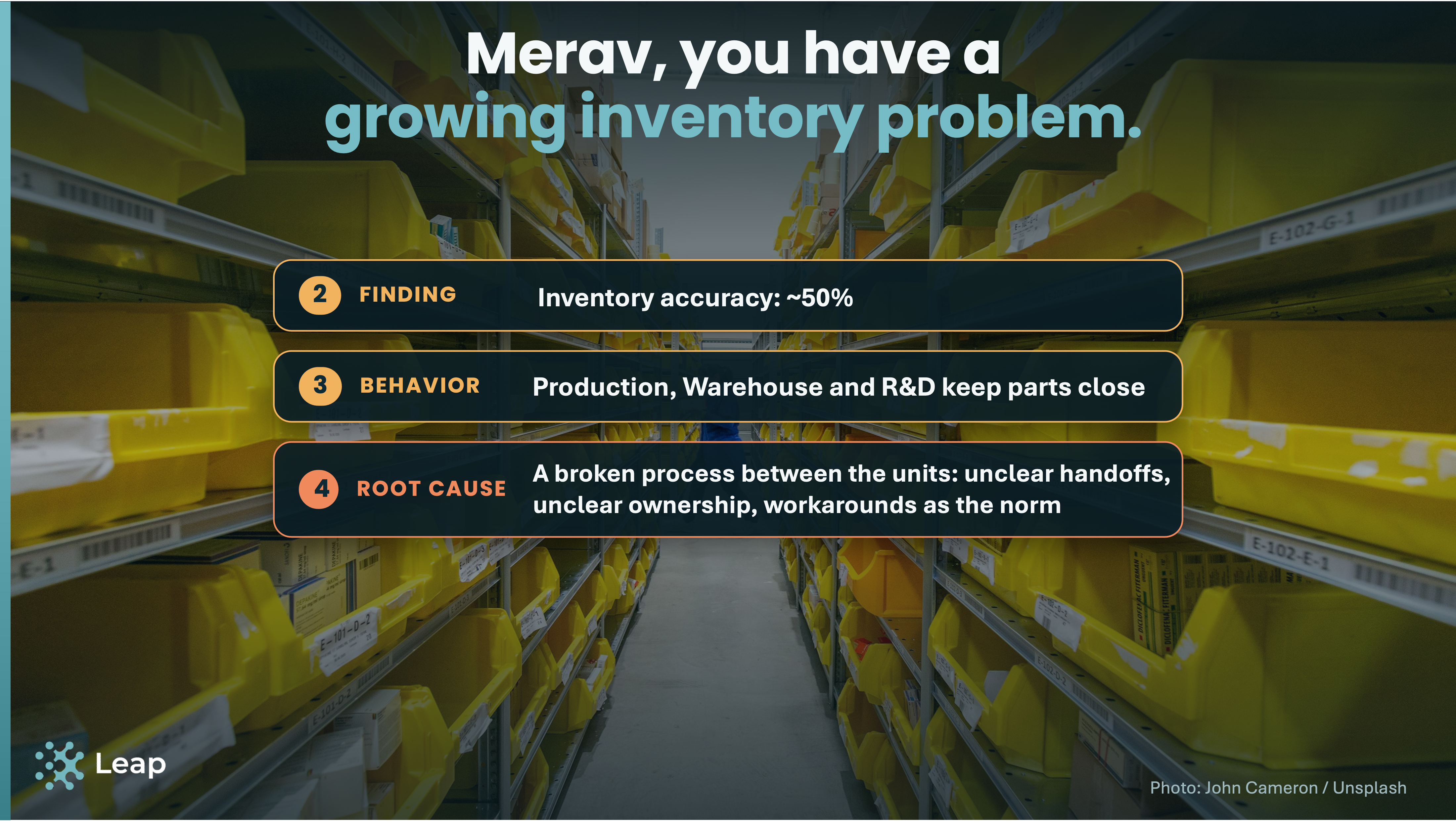
“Merav, you have a growing inventory problem.”
I knew the numbers. But I couldn’t explain what was creating them.
We started investigating. Our inventory accuracy was around 50 percent.
Then came the real surprise.
People in Production, the Warehouse and even R&D were keeping components beside them. They didn’t trust that the parts would be available when they needed them.
Everyone was protecting their own work. Together, they were making the operation less reliable.
We had more inventory, yet parts were missing where they were needed. Deliveries were delayed.
It took us four to five months to understand the full picture. The process between the units was broken. Workarounds had become normal.
The warning signs were there long before that executive meeting.
The KPI did its job. We were missing the earlier picture.
The inventory KPI showed us the result. What we couldn’t see was how that result was being created.
That matters in a growing company. You can add people, tools and capacity while the process between teams becomes less reliable.
Execution is how a business priority becomes completed work. It depends on decisions that hold, clear ownership and handoffs that work.
If those break, faster work inside each team may never become faster business results.
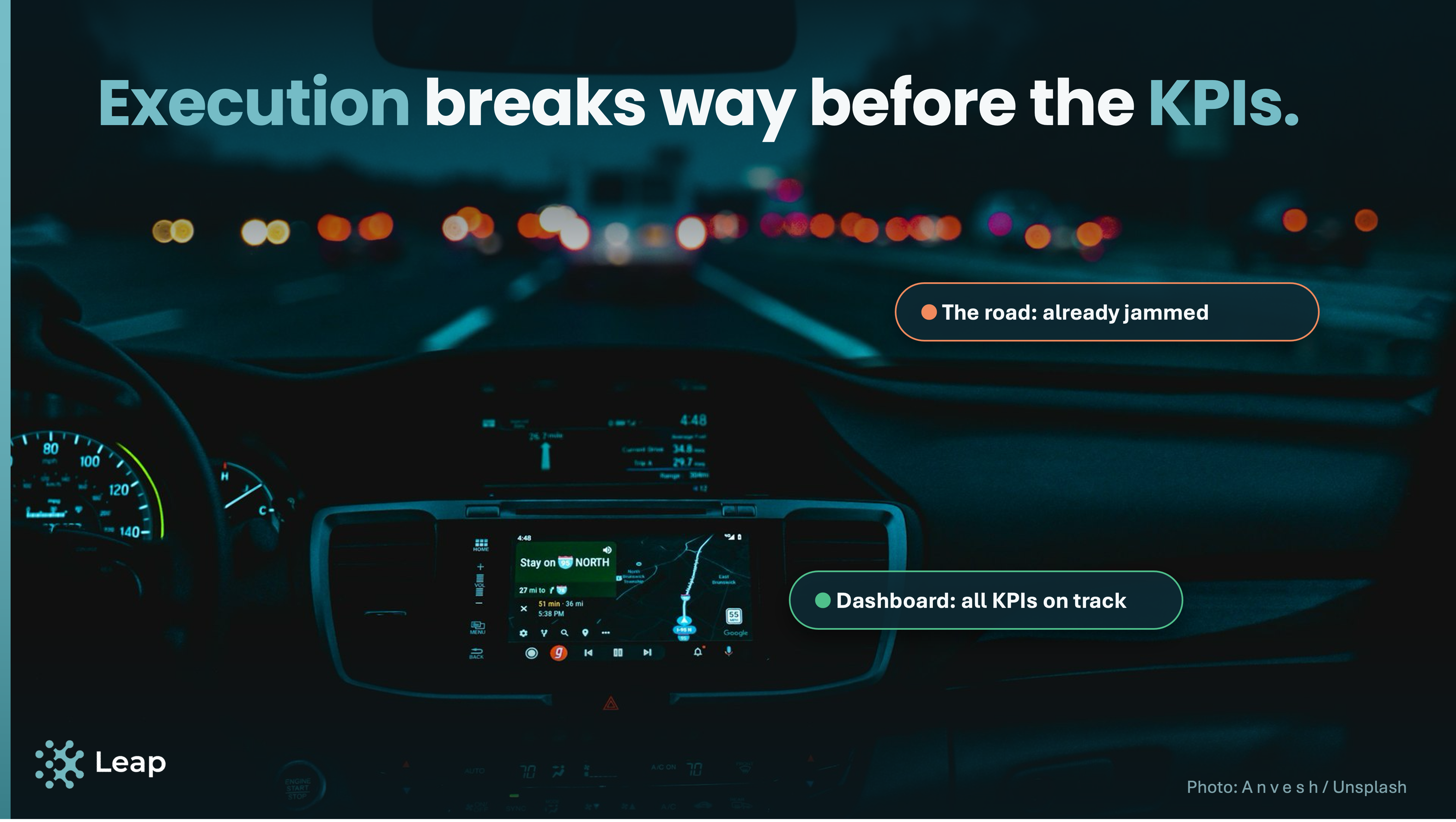
Think of your car’s dashboard versus Waze. The dashboard shows speed and fuel. Waze tells you there’s a jam ahead while you can still change your route.
Managers need that earlier view too.
From a management moment to an organizational pattern
During the session, I showed a real meeting about our pricing model. Leaper identified that I wasn’t giving enough attention to the data before taking final decisions and gave me feedback during the discussion.
I could act on it while the conversation was still happening.
That is useful for one manager. The bigger opportunity comes when we connect recurring signals across the organization.
Is unclear ownership an isolated issue, or does it keep appearing between the same units? Are decisions reopening because teams are working from different assumptions?
This is the role of Execution Intelligence: connect signals from everyday work, identify patterns that may put a business priority at risk, and recommend where to intervene.
In my inventory story, that would have meant recognizing the recurring workarounds, examining the handoffs between the units, and agreeing on a shared process. Then measuring whether shortages declined and delivery improved.
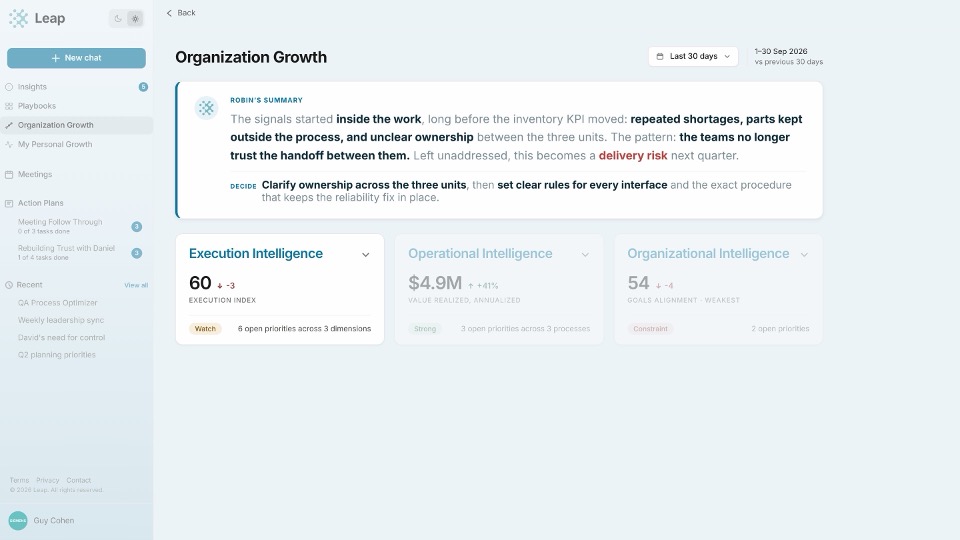
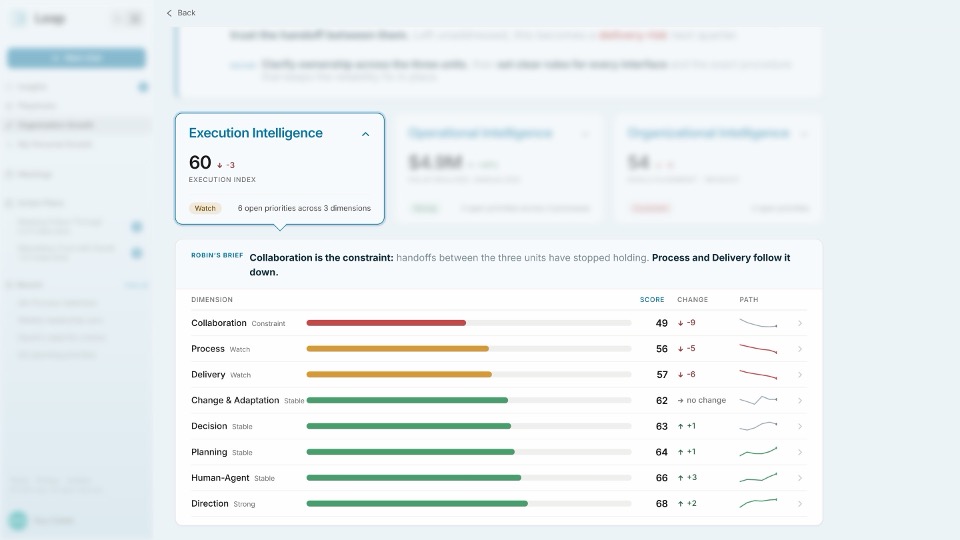
For organizational leaders, this creates a practical opportunity: help managers address the moment in front of them, while identifying shared processes that need to change.
The question for your company is simple:
Choose one business priority you cannot afford to miss. Can you see where its execution is getting stuck before the result appears in the numbers?
If this sounds familiar, bring us that priority. Let’s look at it together.