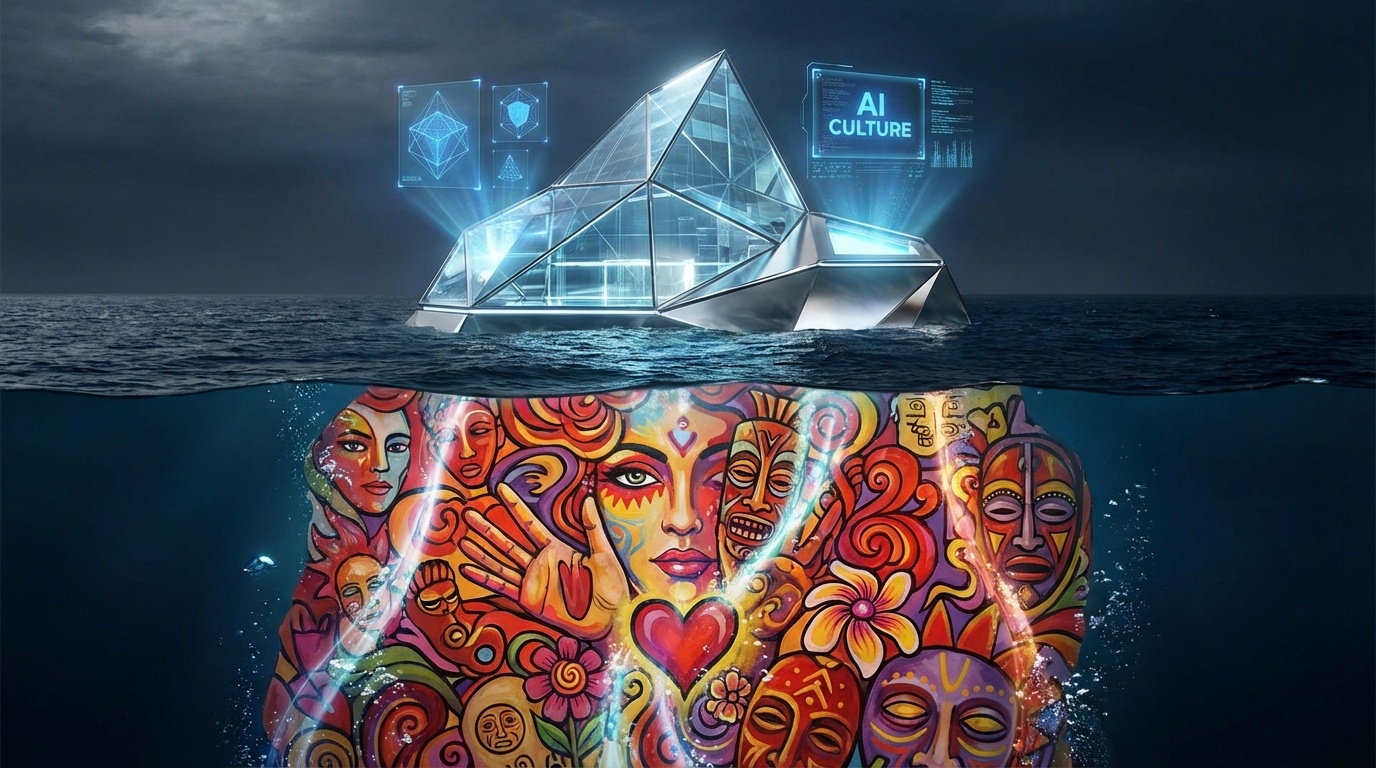
When Omer Ben-David, head of HR at a mid-sized fintech company in Tel Aviv, introduced an AI tool for recruitment, he expected faster screening. What he didn’t expect was the cultural turbulence: team members began to question fairness, transparency, and even their own relevance. Suddenly, the conversation wasn’t about résumés-it was about trust, values, and identity. This is the real story of AI in organizations: not just technology, but cultural change.
Why Culture Matters in the AI Era?
Artificial Intelligence reshapes more than workflows. It rewires expectations, symbols, and social norms inside organizations. Leaders who view AI only as a tool miss the deeper impact-it changes how people feel, interact, and see their place at work.
Using a Cultural Model to Understand the Change
To analyze the cultural shift, let’s use Edgar Schein’s three-layer model of organizational culture, which helps break down the visible, stated, and hidden aspects of workplace culture:
-
Artifacts (Visible Practices):
These are the visible symbols and behaviors in an organization. With AI, they now include chatbots that answer employee queries, dashboards that track performance in real-time, and automated workflows that reduce human intervention. Employees notice these visible markers immediately, and they change the “look and feel” of daily work almost overnight.
-
Espoused Values:
These are the principles and values that organizations say they believe in. Many companies proudly claim to be innovative, people-centric, or data-driven. The adoption of AI can either strengthen these claims (for example, by delivering on innovation promises) or expose contradictions (such as when AI decisions seem opaque and undermine trust).
-
Underlying Assumptions:
At the deepest level lie the unconscious beliefs that guide behavior. These include assumptions about the uniqueness of human judgment, the fairness of decision-making, and the boundaries between human and machine roles. AI challenges these assumptions directly, forcing people to ask: Which decisions should remain in human hands, and where can algorithms truly add value without eroding trust or fairness?
Changing the mindset means affecting all layers! not just the surface.
What Is Actually Changing?
-
Decision Authority:
From manager intuition to algorithmic suggestions. From instructing to connecting and opening bottlenecks.
-
Trust Dynamics:
Employees must trust “invisible” systems.
-
Business Focus:
From running the daily work to continuously improving the business processes.
-
Work Identity:
Workers ask: “Am I valued for judgment or just execution?”
-
Community Meaning:
Shared norms evolve-AI can feel like a partner, or a surveillance tool.
How Managers Can Navigate?
Managing cultural change in the AI era is not simply an HR responsibility-it is a leadership mandate. Executives and managers must set the tone, protect the core of the organization, and ensure that while AI transforms processes, the values, talents, and human spirit remain intact. Leaders need to actively steer transformation, not delegate it.
Practical ways managers can navigate this shift include:
-
Translate cultural concerns into dialogue, not silence, so employees feel heard and included.
-
Demonstrate fairness and explain decisions where AI is involved, to sustain trust.
-
Celebrate human creativity as the differentiator, while
encouraging continuous improvement
alongside AI.
-
Ensure talent feels valued and significant, reinforcing that AI is there to support, not replace (at least this is what I think, although some will leave due to AI implementation).
-
Align AI adoption with organizational purpose, so new tools strengthen rather than weaken the community fabric.
-
Walk the talk: use real time management tools to support this change.
The AI revolution is not a tech story-it’s a culture story.
Final Thoughts
Culture will either amplify or undermine AI adoption. Managers must treat AI as a cultural shift, not just a technological project. AI implementaion bottom-up is your way to impact.
How are you addressing cultural challenges as AI enters your workplace?
Want to learn more about bottom-up AI implementation process? write “Robin” in the comment and you’ll be the first to get the article how to implement bottom-up AI processes with no consultant agency involved, to push mindset changes!
Leap is a decision-making AI-powered platform aiming to help managers to continually improve their day-to-day challenges & business processes. You can also contact us via:
Set-up a 30min meeting: Calendly
contact us @🌐myleap.ai
Or email me: [email protected]